
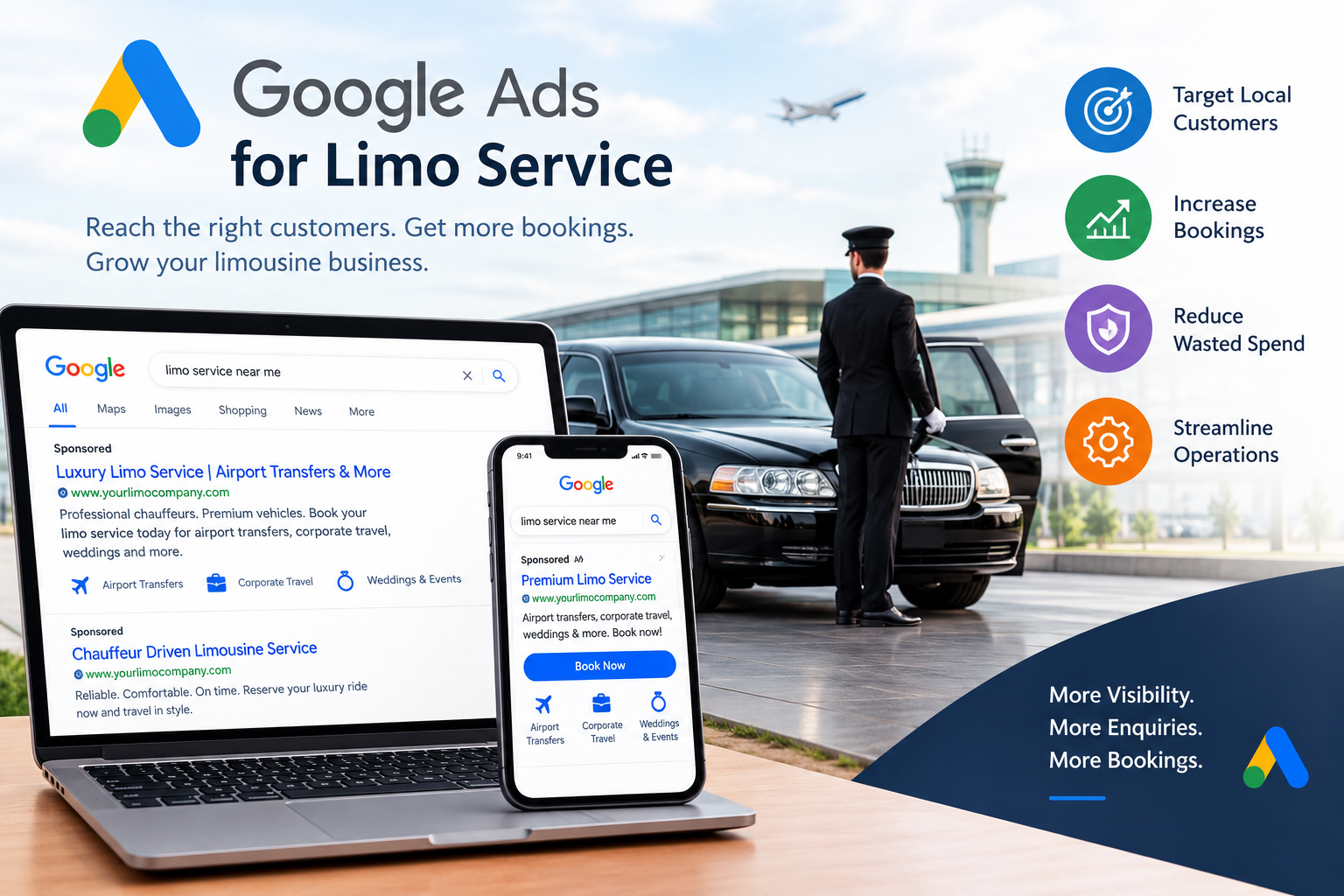
Effective limo service Google Ads campaigns help limousine businesses connect with customers searching for airport transfers, corporate travel, wedding transportation, and luxury chauffeur services. However, running ads without a clear strategy can waste advertising budgets and generate enquiries that never become confirmed reservations.
For limo operators, success means attracting the right customers, converting website visitors into bookings, and delivering reliable service after a reservation is made. This requires more than attractive advertisements. Businesses need relevant keywords, well-designed landing pages, accurate conversion tracking, and efficient booking operations.
Combining digital marketing with a strong SEO limousine company strategy can also help businesses build long-term visibility. With Limo Captain, limousine operators can explore booking and dispatch tools that support reservation management, chauffeur coordination, and daily operations.
Why Google Ads Matter for Limousine Businesses
Google Ads helps limousine companies appear when potential customers search for transportation services. These searches often reveal a specific need, such as booking an airport pickup or arranging a luxury vehicle for a corporate event.
For example, someone searching for “executive airport transfer in Toronto” may be comparing providers before making a reservation. A relevant advertisement can introduce your service at the right moment.
Google Ads can help businesses:
- Generate qualified enquiries for airport transfers and corporate transportation.
- Promote wedding, prom, and special-event limousine services.
- Reach customers within specific cities and service areas.
- Increase visibility for premium chauffeur services.
- Test new markets and service offerings.
The best results come from matching advertising campaigns to customer intent. A company specializing in executive transportation should prioritize relevant business-travel searches rather than spending its budget on unrelated limousine rental terms.
Build a Strong Keyword Strategy
Keyword selection determines which searches may trigger your advertisements. Targeting overly broad phrases can attract people who are researching unrelated topics instead of looking for transportation.
Focus on High-Intent Keywords
Start with search terms that describe your services and customers' booking needs. Examples include:
- Airport limo service near me
- Corporate chauffeur service
- Wedding limousine rental
- Luxury airport transportation
- Executive car service booking
Use Google Keyword Planner to research search demand and estimated advertising costs. Organize keywords into separate campaigns or ad groups based on service type and location.
Reduce Wasted Spending With Negative Keywords
Negative keywords help filter out irrelevant searches. Depending on your business, terms such as “jobs,” “salary,” “free,” or “DIY” may be appropriate exclusions.
Review the search terms report regularly to identify searches that generate clicks without relevant enquiries. Add exclusions carefully, because overly broad negative keywords can also prevent useful searches from triggering your ads.
Combine Google Ads With SEO for a Limousine Company
Paid advertising can provide visibility while a campaign is active, whereas search engine optimization can help build organic visibility over time. A balanced marketing strategy allows limousine businesses to pursue both immediate enquiries and sustainable online growth.
An effective SEO limousine company strategy begins with useful service pages, accurate business information, relevant local keywords, and a website that makes booking straightforward.
Create dedicated pages for airport transfers, corporate travel, wedding transportation, and other major services. Include the locations you genuinely serve, explain your booking process, and answer common customer questions.
For local SEO, maintain consistent business details across relevant online directories and keep your Google Business Profile accurate. Encourage genuine customer reviews without offering misleading incentives or publishing fabricated testimonials.
Google Ads and SEO should support each other. Paid search data can reveal which service terms generate valuable enquiries, helping you identify topics worth covering in organic content. However, advertising does not directly guarantee higher organic rankings.
Create Landing Pages That Convert Visitors
A successful advertisement is only part of the customer journey. When visitors reach your website, they need clear information and an easy way to reserve a vehicle.
A dedicated landing page should include:
- A clear headline: Match the service promoted in the advertisement.
- A visible booking button: Let customers request a quote or start a reservation.
- Relevant service details: Explain availability, service areas, and vehicle options.
- Transparent pricing information: Describe how quotes are calculated and disclose applicable fees.
- Trust signals: Include accurate contact details, genuine reviews, and clear policies.
- Mobile-friendly design: Ensure forms and booking options work properly on smaller screens.
For example, an airport-transfer advertisement should lead to an airport transportation page rather than a general homepage. This creates a more relevant experience and makes it easier for visitors to take the next step.
Test different headlines, calls to action, and form layouts. Measure completed reservations and qualified enquiries instead of judging success by clicks alone.
Manage Advertising Budgets and Track Real Results
Advertising budgets should reflect your business goals, service capacity, and booking profitability. Before launching a campaign, estimate how much you can afford to spend acquiring a customer.
Consider booking revenue alongside chauffeur payments, fuel, vehicle maintenance, insurance, payment processing, and other operating expenses. A campaign that generates many enquiries may still be unprofitable if customers rarely confirm their bookings.
Track important performance indicators, including cost per qualified lead, cost per confirmed reservation, conversion rate, and revenue attributed to advertising.
Configure conversion tracking for actions such as completed quote forms and confirmed bookings. Where possible, connect advertising reports with actual reservation outcomes. A phone call or form submission should not automatically be treated as a profitable booking.
Begin with a manageable budget, review results regularly, and expand campaigns when reliable data supports the decision.
Use Livery Software to Manage Growing Demand
Successful advertising can increase enquiries, but businesses must also manage the operational workload that follows. Handling reservations through disconnected spreadsheets, messages, and phone calls can make it harder to coordinate vehicles and chauffeurs.
Suitable livery software can centralize reservation details and help operators manage their daily workflows. Limo Captain offers booking and reservation management capabilities designed for limousine businesses.
Before choosing a platform, evaluate how it handles your booking process, vehicle scheduling, dispatch requirements, and customer communication.
Coordinate Chauffeurs With a Limo Driver App
A limo driver app can give chauffeurs access to assigned trips, pickup details, and operational updates. This helps drivers receive essential information without depending entirely on manual communication.
For example, an airport-transfer campaign may produce bookings throughout the day. A coordinated driver workflow helps the operations team assign trips and share relevant details with chauffeurs.
Real-time GPS tracking, where available, can also help dispatchers monitor vehicle locations and coordinate service delivery.
Organize Reservations With Limousine Dispatch Software
Limousine dispatch software helps operators coordinate bookings, vehicle availability, and driver assignments. It becomes especially useful when campaigns generate reservations across multiple service categories and time slots.
Limo Captain's booking and dispatch tools can support a more organized workflow, helping teams manage incoming reservations alongside existing trips. Businesses should confirm that the platform's available features meet their specific operational requirements.
Software cannot guarantee advertising conversions or eliminate every scheduling problem. Accurate booking information, staff training, and consistent procedures remain essential.
Optimize Campaigns Through Regular Testing
Google Ads performance can change with competition, seasonal demand, and customer behaviour. Regular reviews help identify opportunities to improve results.
First, compare performance by service and location. Airport transportation may perform differently from wedding bookings, so evaluate each campaign against its own objectives.
Second, test alternative advertisements. One version might emphasize punctual airport pickups, while another highlights professional chauffeurs and convenient reservations. Use conversion data to determine which message attracts valuable customers.
Third, review mobile performance. Make sure visitors can easily find service information, request a quote, and complete a booking from their phones.
Finally, consider remarketing where appropriate and permitted by applicable privacy laws and advertising policies. Follow-up campaigns may reconnect with previous website visitors, but they should complement a useful website experience.
Avoid making significant budget changes based on a small number of clicks. Allow enough time and conversion data to evaluate performance fairly.
Common Google Ads Mistakes to Avoid
Several mistakes can undermine an otherwise promising campaign.
Targeting locations you cannot serve: Restrict campaigns to relevant service areas and review geographic performance.
Ignoring follow-up speed: Respond to enquiries promptly and establish a clear process for sending quotes and confirming reservations.
Promoting unavailable services: Check vehicle capacity and chauffeur schedules before increasing demand.
Ignoring conversion tracking: Measure qualified enquiries and confirmed bookings instead of focusing exclusively on traffic.
Overlooking the customer experience: Ensure that advertising promises match actual services, prices, availability, and booking procedures.
Conclusion
Successful limo service Google Ads campaigns combine relevant keywords, targeted advertisements, helpful landing pages, and accurate conversion tracking. Pairing paid search with an effective SEO limousine company strategy can help businesses pursue immediate enquiries while building long-term visibility.
Reliable livery software, a limo driver app, and limousine dispatch software can also help operators manage the reservations generated by marketing efforts.
Limo Captain provides tools to support limousine booking and dispatch workflows. Visit LimoCaptain to explore the available software and find options that fit your transportation business.